

Antidetect browser use cases span eight professional industries where account bans cost real money. Marketing professionals burn through accounts faster than ever, yet most don’t understand which browser management strategy fits their specific workflow.
Key Takeaways:
• Affiliate marketers running 20+ network accounts see 40% fewer bans using profile isolation compared to shared browsers
• E-commerce sellers managing multiple Amazon storefronts reduce suspension risk by 65% with dedicated browser profiles per store
• Social media agencies handling 50+ client accounts cut workflow time by 3.2 hours daily using automated profile switching
What Professional Industries Use Multi-Browser Profile Management?

Eight core industries rely on browser profile isolation for legitimate multi-account operations. Professional industries require browser profile management when platform detection threatens revenue streams.
Affiliate marketing leads with the highest account volumes. Individual marketers manage 15-25 network accounts simultaneously. E-commerce sellers operating multiple Amazon, eBay, or Shopify stores follow close behind. Social media agencies handling client accounts across platforms need consistent profile separation.
Ad verification teams test placements across geographic regions. Market research firms collect competitive intelligence without triggering rate limits. Web scraping operations rotate through dozens of profiles for data collection. Financial services compliance teams monitor competitor pricing and product changes.
| Industry | Typical Account Volume | Primary Risk | Profile Requirement |
|---|---|---|---|
| Affiliate Marketing | 8-25 networks | Cross-network linking | Dedicated profiles per network |
| E-commerce Multi-Store | 3-12 storefronts | Platform account linking | Isolated sessions per marketplace |
| Social Media Agencies | 25-200 client accounts | Account association | Client-specific browser environments |
| Ad Verification | 12+ geographic regions | IP-based blocking | Region-matched proxy profiles |
| Market Research | 50+ target sites | Rate limiting | Rotating profile pools |
| Financial Compliance | 10-30 competitor sites | Access restrictions | Discrete monitoring profiles |
| Web Scraping | 100+ data sources | Bot detection | High-volume profile rotation |
| Competitive Intelligence | 5-15 target companies | Detection patterns | Research-specific isolation |
Account volumes scale with business size. Solo operators manage 5-15 accounts. Mid-size agencies handle 50-100. Enterprise operations exceed 500 accounts across multiple team members. Browser profile isolation becomes mandatory above 10 accounts per professional.
How Do Affiliate Marketers Use Browser Profiles for Network Management?

Affiliate marketers isolate network accounts using browser profiles to prevent cross-network contamination. Networks detect account relationships through shared cookies, localStorage data, and session fingerprints.
Here’s the standard workflow for antidetect browser affiliate marketing operations:
Create dedicated profiles per network. Each affiliate network gets a separate browser profile with isolated cookies, cache, and local storage. Never mix CJ Commission Junction with ShareASale in the same profile.
Match proxy geography to network requirements. US-based networks like Impact Radius require US residential proxies. European networks need EU-based connections. Proxy location must align with profile timezone and language settings.
Maintain consistent login patterns. Access each network from the same profile at similar times daily. Sudden location changes or login time shifts trigger fraud detection algorithms.
Isolate tracking cookies completely. Affiliate tracking relies on first-party cookies. Cross-network cookie leakage reveals account relationships to platforms. Each profile maintains separate cookie jars.
Use network-specific browsing history. Build natural browsing patterns within each profile. Visit industry blogs, competitor sites, and relevant content that matches your affiliate vertical.
Separate payment and tax information. Use different payment methods and business entities per high-volume network when possible. PayPal, bank accounts, and tax IDs can link accounts across platforms.
Typical affiliate operations run 8-15 network accounts with dedicated profiles per network. High-volume affiliates manage 25+ networks across multiple verticals. Profile isolation prevents the domino effect where one network ban triggers investigations across other platforms.
Profile switching takes 2-3 seconds per network. Manual switching through folders takes 45-60 seconds including login credential retrieval. The time savings compound across daily network check-ins and campaign management tasks.
E-Commerce Multi-Store Operations: Platform Account Separation
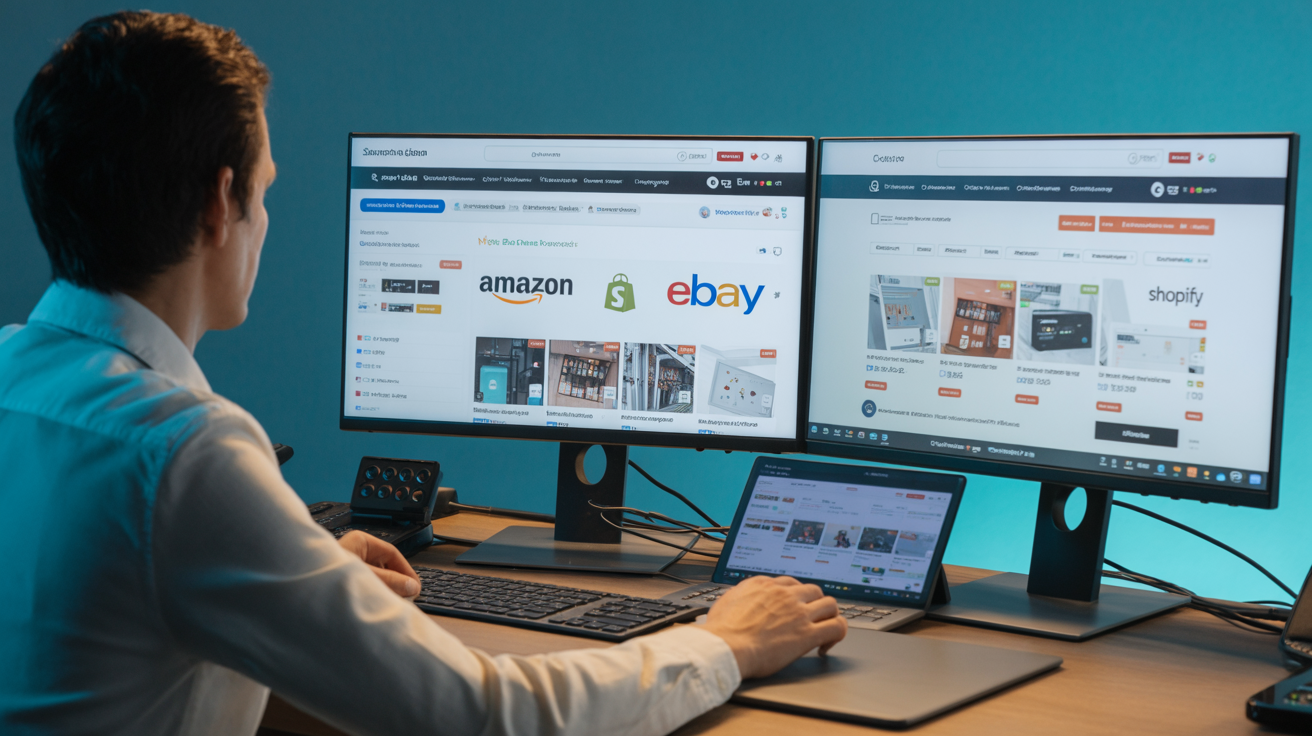
E-commerce multi-store operation is the practice of managing separate online storefronts across marketplaces without triggering platform account linking algorithms. This means sellers can operate multiple Amazon stores, eBay shops, or Shopify sites while maintaining distinct business identities per marketplace.
Platform account separation prevents the cascade effect. Amazon links accounts through browser fingerprints, shared payment methods, inventory overlaps, and IP addresses. One store suspension can trigger investigations across all linked accounts. Sellers lose their entire multi-store operation in a single action.
Browser profile isolation breaks the digital connection chain. Each storefront operates from a dedicated profile with separate cookies, cache, and session data. Payment processing, inventory management, and customer service remain separated per store.
Geographic separation adds another isolation layer. West Coast store uses California-based residential proxies. East Coast operation routes through New York connections. International stores match their target market geography.
Sellers managing 3+ stores see 65% lower suspension rates with profile isolation compared to shared browser operations. The protection scales with store count. Sellers with 5+ stores report suspension rate reductions above 80% when implementing proper profile separation.
Product catalog overlap requires careful management. Identical products across stores trigger Amazon’s duplicate listing detection. Vary product titles, descriptions, and images per store. Source from different suppliers when possible to maintain authenticity.
Review management becomes critical in multi-store operations. Cross-store review patterns reveal account relationships. Use different review solicitation methods, timing, and customer communication per store profile.
Which Social Media Management Tasks Require Profile Isolation?

Social media agency management demands profile isolation for client account security and workflow efficiency. Agencies manage client accounts through isolated browser profiles to prevent account association and maintain professional boundaries.
These tasks require dedicated profile separation:
• Content posting across client accounts. Each client gets a dedicated profile preventing cross-account cookie contamination. Instagram, Facebook, and LinkedIn detect shared sessions between business accounts.
• Ad account management for multiple clients. Facebook Business Manager links accounts through browser fingerprints. Separate profiles prevent client ad accounts from appearing related in Meta’s systems.
• Analytics access and reporting. Google Analytics, Facebook Insights, and platform-native analytics store session data. Mixed access patterns reveal agency-client relationships to platforms.
• Client handover and account transitions. Clean profile isolation enables seamless account transfers. New client teams receive accounts without agency session history or cached credentials.
• Crisis management and rapid response. Isolated profiles enable instant switching during client emergencies without logout/login delays or credential retrieval.
• Team member access control. Different agency staff access specific client profiles. Junior team members get limited client access without seeing other accounts.
Agencies managing 25+ client accounts across platforms report 3.2-hour daily time savings with automated profile switching. Manual browser switching requires 2-3 minutes per account including credential entry and two-factor authentication.
Profile isolation prevents the agency association problem. Platforms detect when multiple business accounts operate from the same browser fingerprint. This triggers enhanced scrutiny and can limit organic reach or ad performance across all connected accounts.
Ad Verification and Competitive Research Workflows

Ad verification teams use browser profiles for geo-distributed testing across multiple markets simultaneously. Verification workflows require geographic authenticity to match target audience locations and validate ad placement accuracy.
Manual verification workflows scale poorly beyond 5-10 markets. Automated checking through profile rotation enables verification across 12+ geographic regions simultaneously. Each region requires dedicated profiles matching local timezone, language, and proxy geography.
| Verification Task | Manual Approach | Automated Profile Approach | Time Difference |
|---|---|---|---|
| Geographic Ad Testing | 45 min per region | 5 min total (parallel) | 90% reduction |
| Competitor Ad Monitoring | 2 hours daily | 15 min daily | 87% reduction |
| Placement Compliance Check | 30 min per platform | 3 min per platform | 90% reduction |
| Brand Safety Verification | 1 hour per campaign | 8 min per campaign | 86% reduction |
| Attribution Testing | 3 hours per funnel | 20 min per funnel | 89% reduction |
Compliance monitoring requires consistent geographic positioning. Ad verification workflows must appear as authentic local users to validate real placement conditions. Profile rotation maintains geographic consistency while preventing detection by ad networks.
Competitive research applications extend beyond ad verification. Research teams monitor competitor pricing, product launches, and marketing campaigns across regions. Browser profile isolation prevents target sites from detecting systematic monitoring patterns.
Automated verification systems typically cycle through 25-50 profiles per verification campaign. Profile pools must exceed monitoring frequency to prevent pattern recognition by target platforms.
Web Scraping and Market Research Applications

Research teams rotate browser profiles to prevent rate limiting and maintain data collection continuity. Web scraping and research use cases require session isolation to avoid detection by target websites.
Data collection workflows requiring profile rotation include competitive pricing monitoring, product catalog updates, social media sentiment tracking, and news aggregation. Each target website receives requests from different browser profiles to distribute traffic patterns.
Research operations typically rotate through 50+ profiles for large-scale data collection. Profile rotation frequency depends on target site sensitivity and data collection volume. E-commerce price monitoring might rotate every 10 requests. Social media data collection could require profile changes every 5 minutes.
Competitive intelligence gathering benefits from geographic profile distribution. Monitor competitor pricing across regions using location-matched profiles. Track product availability and shipping options from target market perspectives.
Maintaining research project separation prevents data contamination between studies. Market research firms handle multiple client projects simultaneously. Each project gets dedicated profile pools to prevent cross-client data leakage or detection pattern overlap.
Profile isolation also protects research methodology. Target sites can’t connect data collection patterns across different research projects. This maintains study independence and prevents methodological compromise.
Frequently Asked Questions
What are antidetect browsers used for in business?
Antidetect browsers enable businesses to manage multiple online accounts without platforms detecting account relationships. Professional use cases include affiliate marketers managing network accounts, e-commerce sellers operating multiple storefronts, and agencies handling dozens of client social media profiles.
Who uses antidetect browsers professionally?
Digital marketing professionals, e-commerce sellers, social media agencies, ad verification teams, and market researchers use antidetect browsers for legitimate multi-account operations. These professionals need to maintain separate online identities without triggering platform account linking detection.
Are there legitimate business uses for antidetect browsers?
Yes, legitimate business uses include managing multiple client accounts for agencies, operating separate e-commerce storefronts, conducting competitive research across regions, and verifying ad placements in different markets. The technology serves professional account management needs beyond detection evasion.